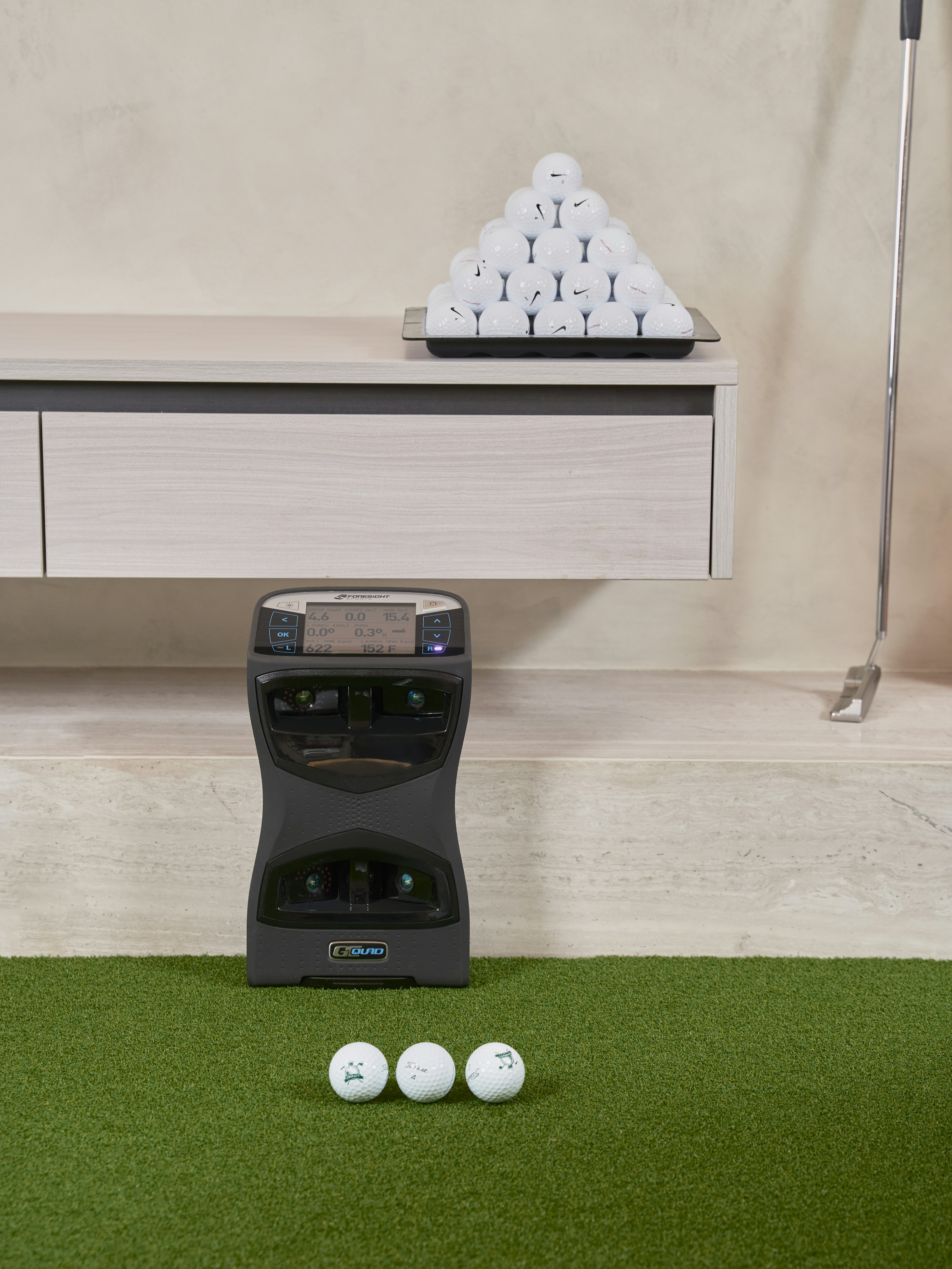
When you’re building a home golf simulator, the net is one of those things that looks simple… until you actually start researching it.
Almost every product claims to be “durable,” “heavy-duty,” or “impact resistant.” But once you start hitting real shots—especially drivers—you quickly realize not all golf nets are built the same.
And more importantly:
Most nets don’t have a real safety standard behind those marketing terms.
That’s why understanding golf net safety ratings for simulator setups is so important, especially if you’re building in a garage, spare room, or shared home space.
If you’ve searched things like:
- best impact rated golf net for home simulator
- are golf simulator nets safe for driver shots
- what thickness net do I need for golf simulator
You’re really trying to answer one core question:
“Will this net actually stop my ball safely every time—or is it going to fail eventually?”
Let’s break that down properly.
Why Golf Net Safety Actually Matters More Than People Think
A golf ball hit with a driver can travel:
- 150–300+ km/h at impact speed (depending on player level)
That means your net is not just catching a ball—it is absorbing sudden, high-energy force repeatedly.
A weak net can lead to:
- Ball rebound at unsafe speeds
- Net tearing or snapping at stress points
- Frame collapse in DIY setups
- Missed shots escaping the enclosure
In a small home simulator space, even a single failure can cause:
- Property damage
- Injury risk
- Loss of confidence in your setup
This is why “good enough” is not actually good enough for nets.
The Problem: There Is No Universal Golf Net Safety Standard
Unlike helmets or industrial safety equipment, golf nets do not follow a single global certification system.
So manufacturers use vague labels like:
- Heavy-duty net
- Commercial grade
- Pro impact net
- Tournament quality
But these terms are not standardized.
So instead of trusting labels, you need to understand structural indicators of safety.
What Actually Determines Golf Net Safety (The Real Factors)
There are 5 key variables that determine whether a golf net is truly safe for simulator use.
1. Material strength (thread thickness + fiber type)
This is the foundation of net safety.
Higher-quality nets typically use:
- High-density polyethylene (HDPE)
- Nylon blends with reinforced fibers
- UV-resistant industrial stitching
Lower-quality nets often use:
- Thin nylon mesh
- Lightweight synthetic fibers
- Weak stitching at joints
The difference shows up in:
- Tear resistance
- Ball rebound behavior
- Long-term durability
A stronger fiber doesn’t just last longer—it absorbs impact more safely.
2. Net density (how tight the mesh actually is)
Net density refers to how small and closely woven the mesh pattern is.
- Low density = larger gaps, faster rebound, higher risk
- High density = tighter weave, slower energy transfer
But there’s a balance:
Too dense without proper layering can still create rebound issues.
The safest systems combine:
- High-density front layer
- Secondary absorption layer behind it
3. Layering system (single vs multi-layer nets)
This is one of the biggest safety differences.
Single-layer nets:
- Stop the ball immediately
- Create higher rebound force
- More stress on attachment points
Multi-layer systems:
- Gradual energy absorption
- Reduced rebound speed
- Better shock distribution
- Longer lifespan
Professional simulator setups almost always use multi-layer impact systems for this reason.
4. Frame tension and structure
A net is only as safe as what it’s attached to.
Common issues include:
- Over-tightened nets (trampoline effect)
- Weak frame anchors
- PVC frames that flex too much
- Poor wall mounting points
A proper system should:
- Hold shape under impact
- Absorb energy without snapping back
- Avoid rigid “drum tension”
5. Depth behind the net (buffer space)
Even the best net needs space behind it.
Without depth:
- Energy rebounds immediately
- There is no dissipation zone
- Ball can bounce back dangerously fast
With proper depth:
- Energy spreads across space
- Secondary layers absorb leftover force
- Rebound speed is significantly reduced
What “Impact Rated” Actually Means (In Real Terms)
When a product is called “impact rated,” it usually means:
- It has been tested with repeated ball strikes
- It can withstand driver-level speed impacts
- It uses reinforced stitching and materials
However, what it does NOT always guarantee:
- No rebound
- No wear over time
- No failure under extreme angles
- Safe installation without proper setup
So “impact rated” is a starting point—not a full safety guarantee.
Types of Golf Nets Used in Simulator Setups
Let’s break down the real-world categories.
1. Basic practice nets (entry-level)
These are:
- Lightweight
- Portable
- Designed for casual practice
Pros:
- Cheap
- Easy setup
- Good for light use
Cons:
- High rebound risk
- Not ideal for drivers
- Limited durability
Best for:
- Beginners
- Temporary setups
- Outdoor use
2. Heavy-duty home simulator nets
These are the most common for indoor setups.
Features:
- Reinforced mesh
- Stronger frames
- Better tension control
Pros:
- Good balance of safety and cost
- Suitable for driver use
- More stable
Cons:
- Still needs backing layers
- Can rebound if poorly installed
Best for:
- Garage simulators
- Spare room setups
- Regular practice
3. Commercial-grade enclosure systems
These are used in:
- Coaching studios
- Golf performance centers
- High-end home builds
Features:
- Multi-layer netting
- Side barriers
- Ceiling protection
- Integrated impact zones
Pros:
- Highest safety level
- Minimal rebound
- Full enclosure protection
Cons:
- Expensive
- Requires space
- More complex installation
Best for:
- Serious golfers
- Coaching setups
- Premium home simulators
Common Golf Net Safety Mistakes
These are the issues that cause most problems.
Mistake 1: Over-tightening the net
This is the biggest mistake.
A tight net:
- Acts like a trampoline
- Increases rebound speed
- Puts stress on anchor points
Mistake 2: Ignoring side protection
Many setups only protect the front area.
But mishits can:
- Go sideways
- Hit walls
- Bounce unpredictably
Side netting or barriers matter more than people think.
Mistake 3: Mounting to weak structures
Common weak points:
- Drywall
- Lightweight garage doors
- Thin wooden frames
A net is only as strong as its weakest anchor.
Mistake 4: No secondary absorption layer
Without a backing layer:
- Energy has nowhere to go
- Rebound increases
- Noise increases
How to Make Any Golf Net Safer (Practical Fixes)
You don’t always need to buy a new net.
Often you can upgrade safety significantly.
Fix 1: Add a secondary curtain or blanket layer
Behind your net, add:
- Heavy moving blankets
- Blackout curtains
- Foam panels
This absorbs leftover energy.
Fix 2: Reduce tension slightly
Let the net:
- Hang naturally
- Move on impact
- Absorb instead of resist
Fix 3: Increase distance between player and net
More space = more energy dissipation time.
Fix 4: Add angled positioning
Slight backward angle reduces direct rebound force.
Safety Checklist for Home Golf Simulator Nets
Before using your setup, check:
- Net has controlled slack (not tight like a drum)
- Frame is anchored securely
- There is a secondary absorption layer
- Adequate distance from hitting zone
- Side protection is installed if space is tight
- No hard wall directly behind net
If all of these are true, your setup is significantly safer.
Interlinking Opportunities for Your Directory
This article connects strongly with:
- How to stop golf ball bounce back in simulator setups
- How to build a golf simulator in a garage
- Best lighting setup for golf simulators
- How to soundproof a golf simulator room
- Garage vs spare room simulator setup guide
And product/listing categories like:
- Golf nets and enclosures
- Impact screens
- Simulator safety accessories
- Acoustic protection kits
Final Thoughts: Safety Is About Energy Control, Not Strength
Most people assume a “stronger net” is the answer.
But in reality, safety comes from:
- Controlled tension
- Layered absorption
- Proper spacing
- Good structural anchoring
A net doesn’t just stop a golf ball.
It manages energy in a confined space.
When you design it correctly, the ball stops quietly, safely, and predictably—without drama, rebound, or risk.