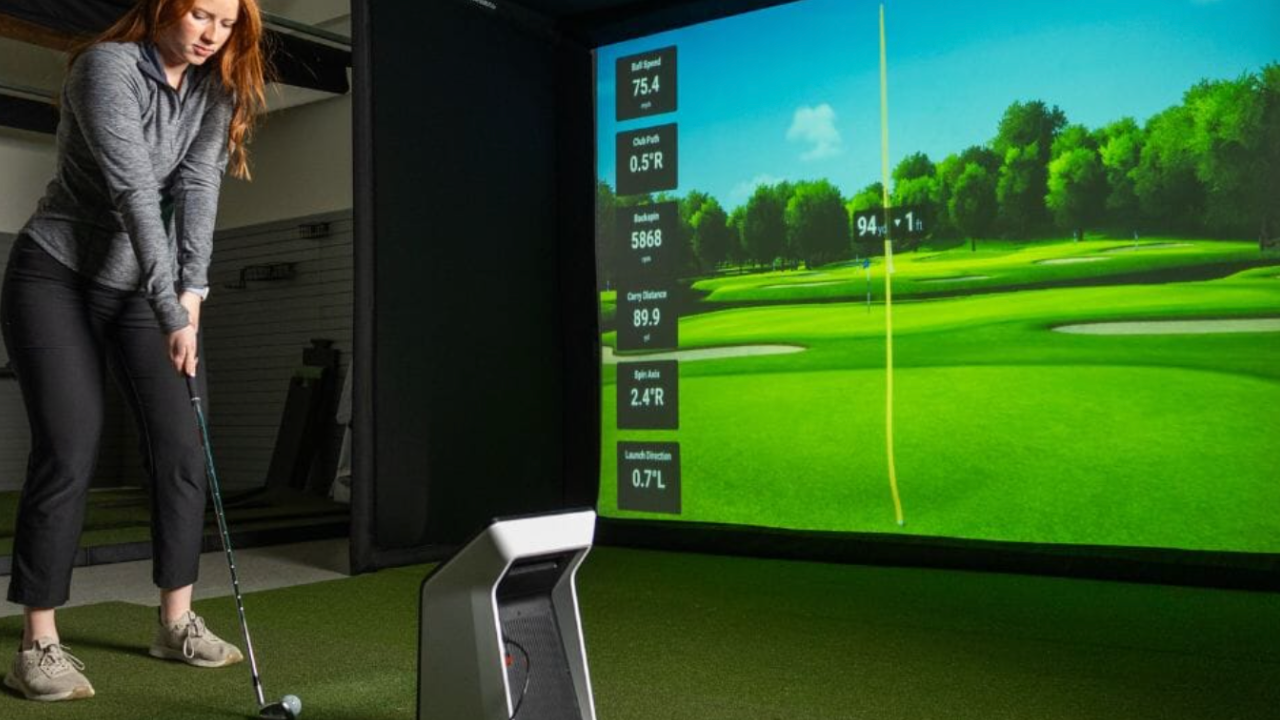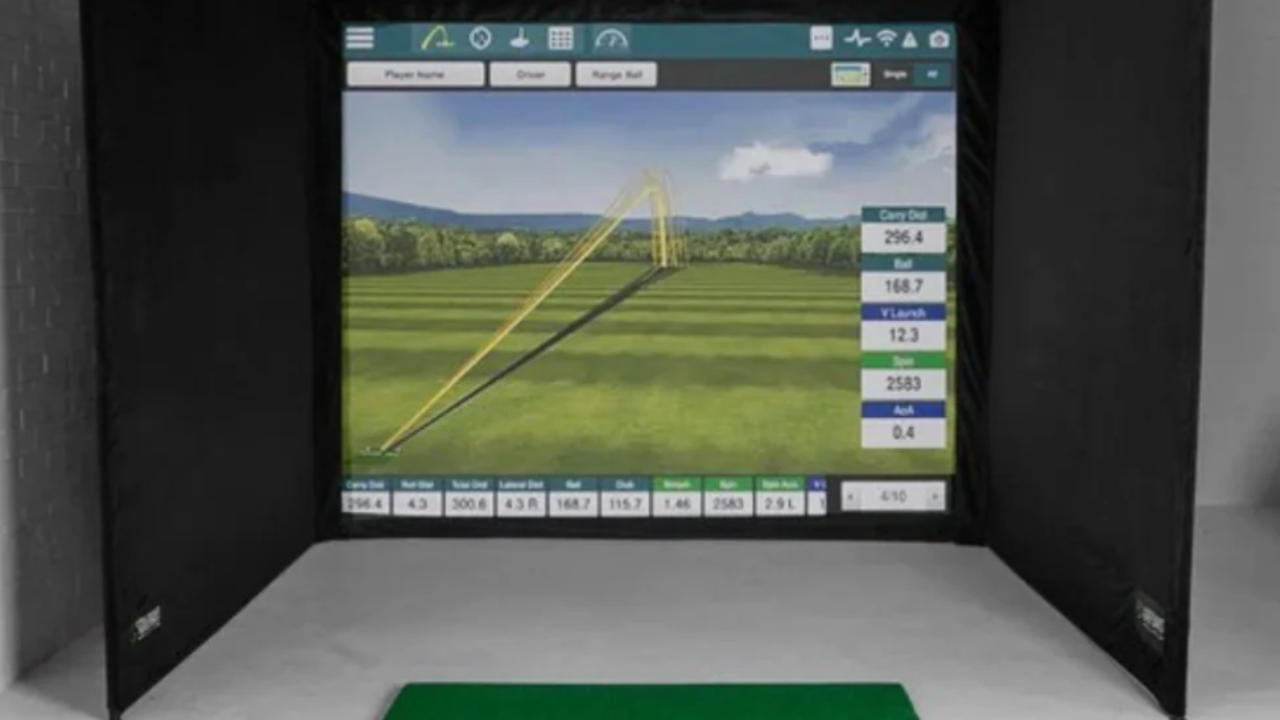
One of the first practical questions people run into when building a home golf simulator is not about technology or brands, but about space.
You might already be thinking about launch monitors, software, or enclosures, but everything eventually comes back to one reality: whether your space can actually support the experience you’re trying to create.
And this is where expectations often clash with reality.
Because a golf simulator can technically fit into a lot of places, but that does not always mean it will feel good to use.
There is a difference between something that “fits” and something that feels like a proper simulator.
The real meaning of “enough space”
When people ask how much space they need, they are usually trying to avoid two problems:
First, they do not want to invest in a setup that feels cramped or unusable.
Second, they do not want to overbuild a space unnecessarily.
The truth sits somewhere in the middle.
A functional golf simulator does not require a commercial building or dedicated studio. But it does require enough clearance to swing comfortably, see the screen clearly, and avoid feeling restricted during normal play.
If any of those elements are compromised, the experience stops feeling like golf and starts feeling like hitting balls in a confined space.
Ceiling height is the first non-negotiable factor
Of all the dimensions involved in a golf simulator setup, ceiling height is the one that causes the most issues.
If the ceiling is too low, the entire experience becomes compromised, regardless of how good your launch monitor or software is.
Most golfers find that they need enough vertical clearance to fully extend their swing without fear of contact or restriction. If you are adjusting your posture or shortening your swing to avoid the ceiling, the simulator will never feel natural.
This is also where different systems can behave differently in practice, but no launch monitor or software can compensate for physical restriction.
If the space feels tight overhead, it will always feel tight to use.
Depth matters more than people expect
After ceiling height, depth is the next most important factor, but it is often underestimated.
Depth is not just about where you stand and where the screen is placed. It also affects how comfortable the environment feels during ball flight tracking and impact detection.
Some systems, such as those from Garmin or FlightScope, rely more heavily on radar-based tracking, which can require more thoughtful spacing behind the golfer.
Camera-based systems like SkyTrak or Uneekor tend to be more forgiving in tighter indoor environments, which is one reason they are often chosen for garages and smaller dedicated rooms.
But even with more flexible systems, depth still affects comfort.
If you feel like you are standing too close to the screen, or too close to walls behind you, the experience becomes mentally restrictive, even if the system technically works.
Width is about rhythm, not just safety
Width is often thought of in terms of safety — making sure you do not hit walls or objects during your swing.
But in practice, width is more about rhythm and comfort.
A narrow space can technically work if everything is perfectly positioned, but it often feels restrictive over time. You become aware of your surroundings in a way that interrupts natural swing flow.
A slightly wider space allows for a more relaxed setup, especially if multiple players are using the simulator or if you are switching between right-handed and left-handed swings.
This is where room design tools and enclosure systems from brands like GolfBays can help optimize usable space, but they do not change the underlying limitations of the room itself.
They help you organize space. They do not create space.
What “minimum space” actually looks like in practice
Instead of thinking in strict measurements, it is more useful to think in terms of experience levels.
At the minimum level, you can create a functional simulator setup in a compact space if everything is carefully arranged. This might be enough for basic practice and occasional use.
At a more comfortable level, you can build a space that feels natural to swing in, where you are not constantly adjusting your stance or awareness.
At the ideal level, the simulator feels like a dedicated environment where you can forget about the room entirely and focus on the game.
Most frustration comes from building somewhere between the first two levels without realizing it.
The mistake most people make when planning space
The most common mistake is assuming that equipment will solve spatial limitations.
People often think that if they choose the right launch monitor or software, it will compensate for a tight room.
But in reality, the physical environment defines the baseline experience. Technology enhances it, but it does not override it.
This is why some setups with mid-range equipment feel better than expensive setups in poorly planned rooms.
The space itself is doing more of the work.
How launch monitors interact with space constraints
Different systems respond differently to space limitations, but none of them eliminate the need for proper planning.
More flexible systems like Garmin devices tend to adapt to multiple environments, but they may require more careful positioning depending on the room.
Indoor-focused systems like SkyTrak are designed to function well in tighter simulator builds, which is why they are commonly used in garages and basements.
More advanced systems like FlightScope or Uneekor can offer deeper performance feedback, but they still depend on having enough physical space to operate comfortably.
No system can fully compensate for a room that does not support a natural swing environment.
What actually matters most
When you strip everything back, the question is not just how much space you need.
The more important question is whether the space allows you to swing freely, see clearly, and repeat your motion without adjustment or hesitation.
If those three conditions are met, the simulator will feel usable.
If they are not, even the best equipment will feel limited.
Final takeaway
A golf simulator does not require a perfect room, but it does require a functional one.
Ceiling height ensures you can swing naturally.
Depth ensures the system can function and feel comfortable.
Width ensures the experience feels relaxed rather than restricted.
When all three are balanced, the technology disappears and the experience starts to feel like real golf.
That is the point where a home simulator stops being a project and starts becoming part of your routine.