Junior golf development depends heavily on repetition and consistency.
But in most households, regular practice is limited by:
- weather
- daylight hours
- transportation to the range
- access to coaching facilities
- school schedules
- tournament travel demands
A home simulator removes many of these barriers.
Instead of planning practice sessions around logistics, children can practice:
- after school
- in short sessions
- between lessons
- during the winter off-season
- before weekend rounds
That convenience alone often leads to faster improvement.
The Biggest Advantage: Consistent Practice Without Travel
One of the hardest parts of supporting junior golfers is simply getting them enough practice time.
Driving range visits often require:
- packing equipment
- driving across town
- waiting for space
- paying range fees
- working around weather conditions
With a simulator at home, practice becomes simple.
Children can:
- warm up before tournaments
- practice distance control
- repeat drills from lessons
- build swing confidence between coaching sessions
Short, frequent practice sessions are one of the strongest predictors of junior golf improvement.
Simulators Help Kids Build Confidence Faster
Confidence is one of the most important parts of junior golf development.
Young golfers benefit from being able to:
- see their shot distances clearly
- track improvement over time
- repeat successful swings
- correct mistakes quickly
- practice without pressure from other players nearby
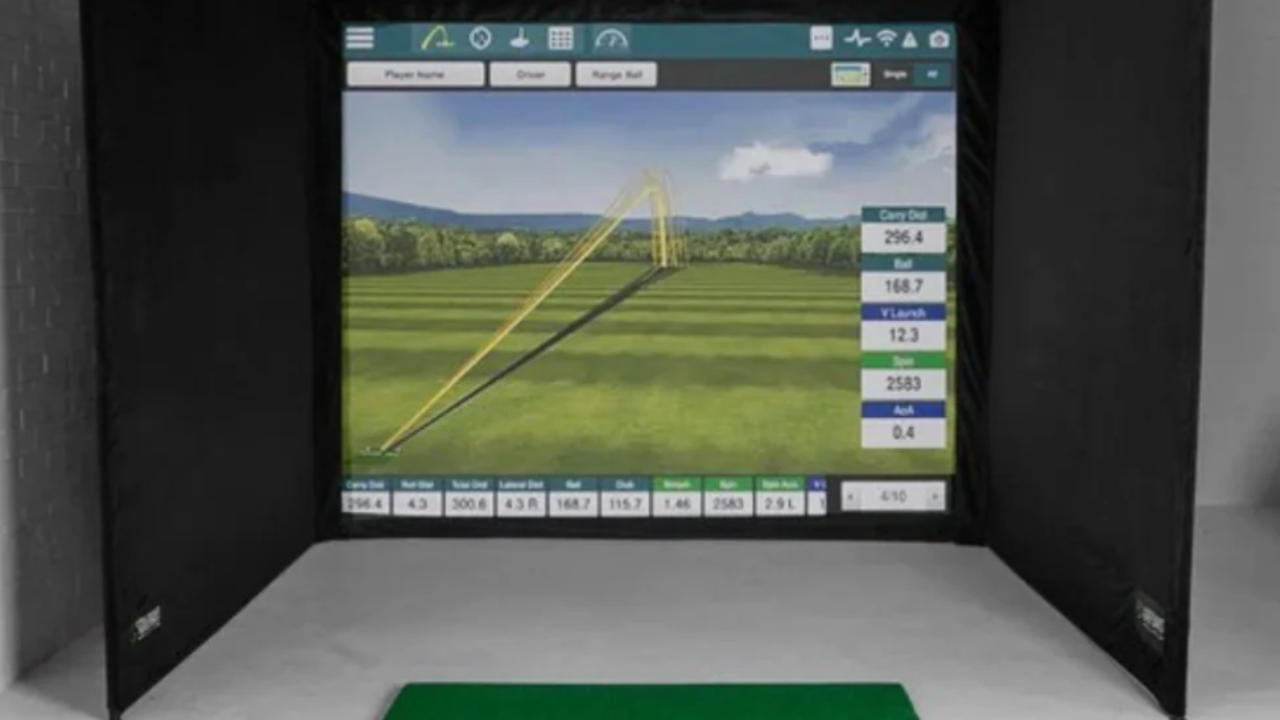
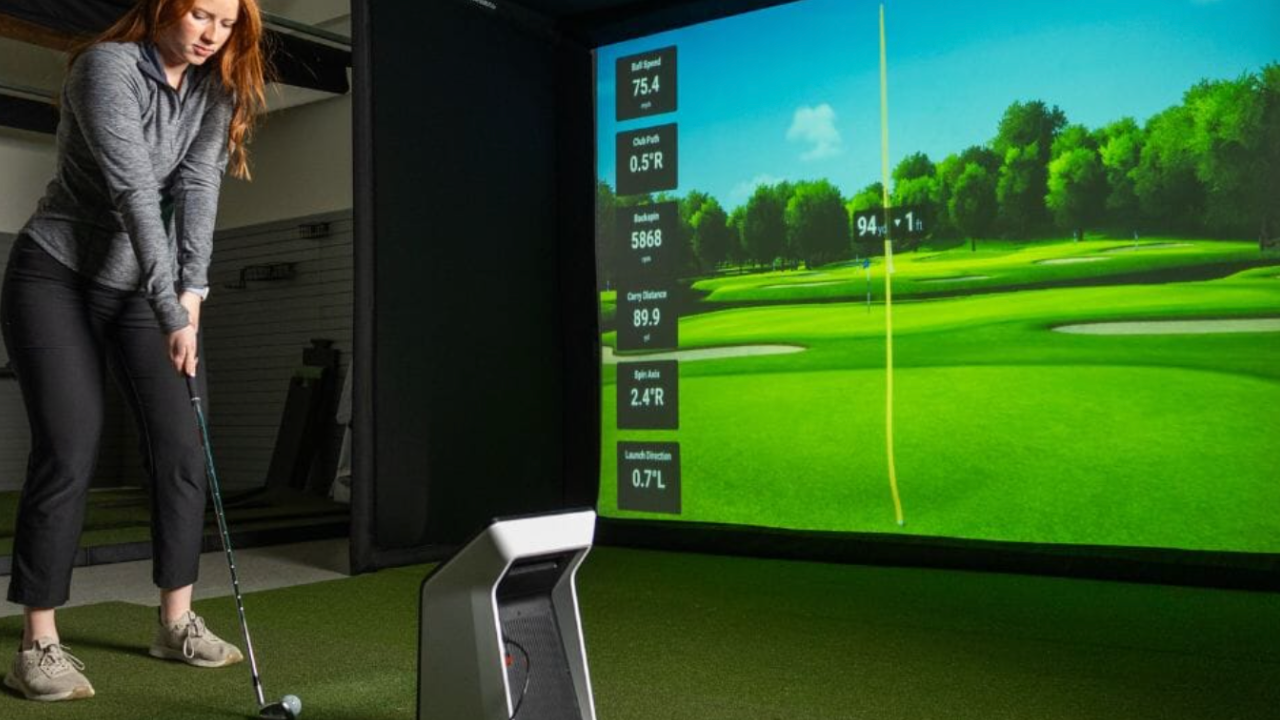
Launch monitor feedback helps children understand what their swing is doing — instead of guessing.
This makes practice feel more rewarding and measurable.
Junior Golfers Learn Distance Control Much Earlier With Simulators
Many young players struggle with one specific skill early in development:
distance awareness.
Simulators help children quickly learn:
- how far each club travels
- how swing speed affects carry distance
- how contact quality changes results
- how wedges behave differently from irons
This type of feedback is difficult to get consistently at most public driving ranges.
Indoor tracking systems make distance learning easier and faster.
Simulators Allow Kids to Practice Even in the Off-Season
One of the biggest challenges in junior golf development is maintaining progress during winter months or rainy seasons.
Without practice access, young golfers often lose:
- swing timing
- confidence
- rhythm
- distance control
A simulator keeps development moving forward year-round.
Even short weekly sessions help preserve progress between outdoor seasons.
For competitive junior golfers, this can be a major advantage.
Many Coaches Recommend Simulator Practice Between Lessons
Golf instruction works best when students repeat what they learn between sessions.
Simulators make it easier for children to:
- repeat drills assigned by coaches
- track swing improvements
- monitor ball flight changes
- test adjustments immediately
Instead of waiting a full week between lessons to practice corrections, young players can reinforce changes at home.
This speeds up development significantly.
Simulators Make Practice More Fun for Younger Golfers
Practice needs to be enjoyable to stay consistent — especially for children.
Simulators turn practice into something interactive.
Kids often enjoy:
- playing virtual courses
- distance challenges
- closest-to-the-pin games
- target-practice drills
- family competitions
When practice feels like a game, children stay engaged longer.
This increases total practice time without pressure.
Simulators Help Parents Support Their Child’s Golf Development
Parents don’t need to be golf experts to help their children practice effectively.
A simulator provides built-in feedback like:
- carry distance
- launch angle
- shot direction
- contact consistency
This makes it easier for parents to support structured practice routines at home.
Instead of guessing whether practice is productive, families can track progress together.
Are Golf Simulators Safe for Children to Use?
Yes — when installed correctly, simulators are safe for junior golfers.
Parents should always plan basic safety features into their setup.
Important safety considerations include:
- adequate ceiling height for swing clearance
- side protection netting or enclosure walls
- proper hitting mat placement
- adult supervision for younger children
- safe ball types for indoor use if space is limited
Most modern enclosure systems are designed specifically to reduce rebound risk and improve indoor safety.
Minimum Age Recommendations for Simulator Use
Children of many ages can safely use simulators, depending on supervision and setup quality.
Typical guidance looks like this:
Ages 5–7
- short supervised practice sessions
- foam balls if space is limited
- focus on fun target practice
Ages 8–12
- structured swing repetition
- launch monitor feedback begins helping development
- virtual course play becomes engaging
Ages 12+
- simulator data becomes extremely valuable
- distance tracking improves club selection skills
- practice routines begin resembling adult training
Older junior golfers benefit the most from simulator accuracy features.
Simulators Help Tournament Juniors Prepare More Effectively
Competitive junior golfers benefit from simulator access in several ways.
They can:
- warm up before tournaments
- rehearse difficult yardages
- test swing adjustments mid-week
- build confidence before travel events
- maintain rhythm between competitions
Many tournament families install simulators specifically for this reason.
It reduces reliance on unpredictable practice access.
Families Often Use Simulators Together
One unexpected benefit many parents report is shared family participation.
Simulators often become a shared activity space where:
- siblings learn the game together
- parents practice alongside children
- family competitions create motivation
- practice becomes social instead of repetitive
This increases how often the simulator is used overall.
Shared use also makes the investment easier to justify.
Simulators Help Young Golfers Understand Their Swing Earlier
Traditional practice sometimes leaves junior players guessing about results.
Simulators provide immediate feedback on:
- contact quality
- ball speed
- direction
- trajectory
- distance consistency
This accelerates learning compared to range-only practice environments.
Young golfers often improve faster when they can see their progress clearly.
A Home Simulator Can Reduce Long-Term Training Costs
Junior golf development often includes ongoing expenses like:
- range visits
- indoor winter practice facilities
- travel to training centers
- lesson reinforcement sessions
A home simulator helps reduce some of these recurring costs by bringing practice access into the house.
Over several seasons, many families find simulator ownership offsets part of these expenses.
Space Requirements for Junior Golf Simulator Use
Children don’t always require full adult simulator dimensions.
Many junior-friendly setups work well in:
- garages
- spare rooms
- basements
- shared recreation spaces
Because younger golfers swing shorter clubs, simulator setups can sometimes fit into slightly smaller spaces than adult-only installations.
This makes installation possible in more homes than parents expect.
Entry-Level Simulator Setups Work Very Well for Junior Golfers
Families supporting junior golfers do not always need premium simulator equipment.
Many children benefit greatly from:
- compact launch monitors
- quality hitting mats
- practice-focused simulator software
- garage-based installations
Even entry-level setups provide enough feedback to support meaningful improvement.
Parents often start with smaller systems and upgrade as children progress competitively.
When a Home Simulator Makes the Most Sense for Junior Golf Families
A simulator becomes especially valuable if:
your child plays competitive golf
practice access is limited locally
winter interrupts development time
lessons require between-session repetition
travel schedules make range visits difficult
In these situations, simulator access can noticeably accelerate improvement.
Final Thoughts: Simulators Can Be One of the Best Training Tools for Junior Golfers
Golf simulators aren’t just for adults practicing at home.
For many families, they become one of the most effective tools supporting junior golf development.
They make practice easier to access.
They make feedback easier to understand.
And they help children build confidence between lessons, seasons, and tournaments.
For parents supporting young golfers, a home simulator often becomes more than a convenience — it becomes part of the training environment that helps progress happen faster and more consistently year-round.